
Understanding FOB, CIF and CFR
A practical guide to international delivery terms used in global commodity trading.
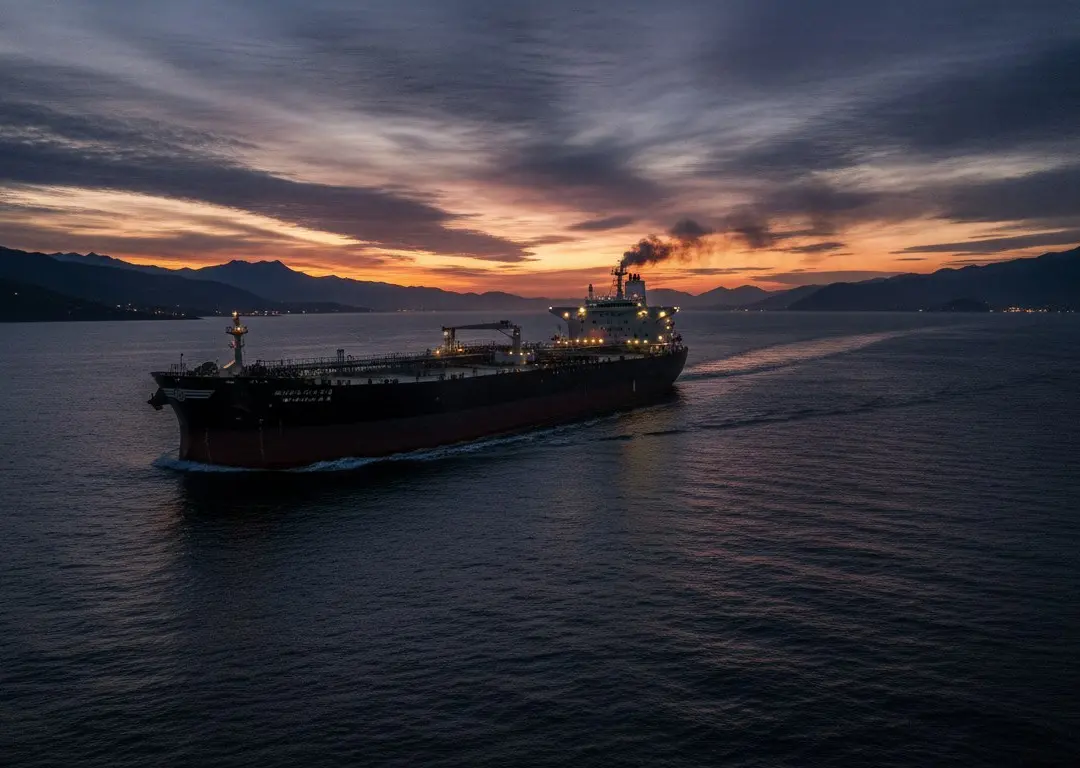
Every international cargo has to answer three questions: who arranges and pays for transport, who insures the goods, and at what point the risk of loss passes from seller to buyer. Incoterms® — the standard trade terms published by the International Chamber of Commerce (ICC) — answer them in three letters. In seaborne commodity trading the three you will meet most often are FOB, CFR and CIF. This guide follows Incoterms 2020, the current edition.
FOB — Free On Board
Under FOB the seller delivers the goods on board the vessel nominated by the buyer at the named port of shipment. Risk passes to the buyer once the goods are on board.
- Seller: brings the cargo to the port, clears it for export and loads it within the agreed loading window.
- Buyer: charters or nominates the vessel, pays freight and insurance, and bears all risk from the moment of loading.
FOB suits buyers who control their own shipping or have strong freight relationships. In oil trading the buyer's vessel nomination and the laycan — the window in which the vessel must arrive to load — become critical commercial terms.
CFR — Cost and Freight
Under CFR the seller arranges and pays for carriage to the named port of destination. But — and this is the most common misunderstanding — risk still passes to the buyer when the goods are loaded on board at the port of shipment, not when they arrive.
- Seller: books the vessel and pays freight to the destination port.
- Buyer: carries the risk during the voyage and should arrange its own cargo insurance.
CIF — Cost, Insurance and Freight
CIF works like CFR with one addition: the seller must also buy cargo insurance for the buyer's benefit. Risk still transfers at loading. Under Incoterms 2020 the minimum cover for CIF is Institute Cargo Clauses (C) — a limited, named-perils cover — for 110% of the contract value. Buyers who need broader protection should agree a higher level of cover in the contract or insure the cargo themselves.
At a glance
- Who pays freight? FOB — the buyer. CFR and CIF — the seller.
- Who insures the cargo? FOB and CFR — the buyer, if it chooses to. CIF — the seller, at minimum cover.
- Where does risk pass? In all three — on board the vessel at the port of shipment.
- Which port is named? FOB names the port of shipment ("FOB Fujairah"); CFR and CIF name the port of destination ("CIF Rotterdam").
What Incoterms do not cover
Incoterms allocate costs, risk and delivery obligations — nothing more. They do not decide when ownership passes, how and when payment is made, how quantity and quality are measured, or what happens if the vessel waits at port. In refined products trading those points are set out in the sales contract, often by reference to standard general terms and conditions:
- quantity and quality determination by an independent inspector at the load port;
- laytime, demurrage and notice of readiness;
- payment terms, usually against shipping documents under a letter of credit;
- the governing law and the forum for resolving disputes.
A note on containers
FOB, CFR and CIF were designed for goods loaded directly onto a vessel, such as bulk liquid cargoes. For containerised goods, which are handed over at a terminal before loading, the ICC recommends the multimodal equivalents — FCA, CPT and CIP.
Choosing the right term
No term is universally better. Buyers with their own fleet or chartering desk often prefer FOB; buyers who want a delivered price at their own port usually choose CFR or CIF. What matters is that both sides understand exactly where their responsibilities begin and end — and that the contract fills in everything the three letters leave out.
Incoterms® is a registered trademark of the International Chamber of Commerce.